



Skip to content

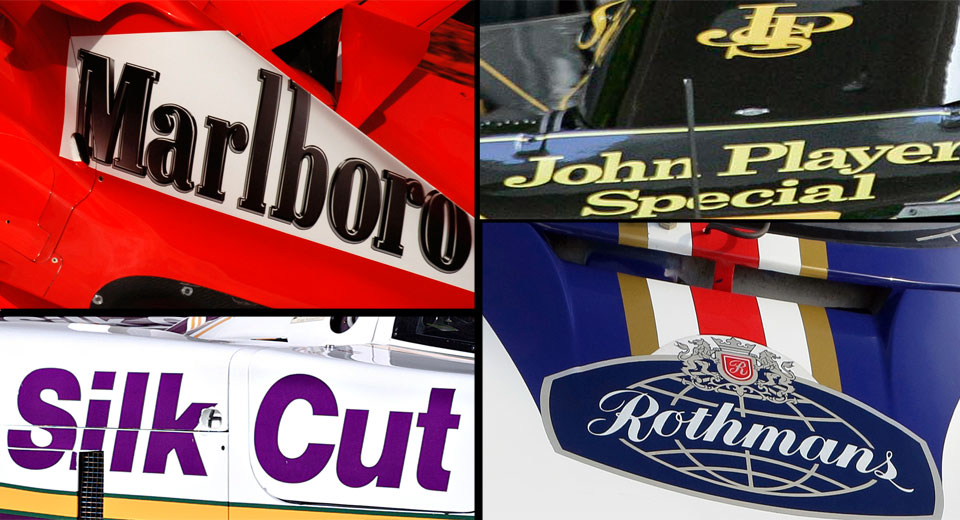
cigarette race car The iconic Marlboro livery used in Formula 1, Rally and other racing series. • Atelier Eau Rouge

Marsoni M251S
Sale price$26.06
Pay 4 payments of $6.51 a month.Shop Pay
Get it in 3 business days with 1 day shipping. Friday, May 29
Mortality and life expectancy in relation to long term cigarette, cigar and pipe smoking: The Zutphen Study Tobacco Control Amazon.com: How I Quit My 4 Pack a Day Cigarette Habit (and you can too) eBook : Burns, Dennis: Kindle Store Smoke Eater Air Purifiers in Air Purifiers Walmart.com Plum Jam and Pot Mess: Coping With Chaos As A Schoolboy and Sailorboy PDF Room History
Easy Shipping

Quick Dispatch:

Your cigarette race car The iconic Marlboro livery used in Formula 1, Rally and other racing series. • Atelier Eau Rouge orders ship within 1-2 business days.

Delivery Options:

  • Standard: 3-7 business days
  • Fast: 2-3 business days
  • Express: 1-2 business days

Order Tracking:

You'll receive a tracking link by email once your cigarette race car The iconic Marlboro livery used in Formula 1, Rally and other racing series. • Atelier Eau Rouge ships.

Need Help?
Questions about cigarette race car The iconic Marlboro livery used in Formula 1, Rally and other racing series. • Atelier Eau Rouge, sizing, or delivery? We're just an email away.

Live Shipping Estimates:
Enter your location at checkout to see available shipping methods and costs for cigarette race car The iconic Marlboro livery used in Formula 1, Rally and other racing series. • Atelier Eau Rouge in your area.

Get Shipping Estimates

Exchange/Return Notes
  • We offer a 30-day return/exchange service after receiving.
  • Final sale items are not eligible for returns or exchanges.
  • To process your return/exchange, please contact us at [email protected]
  • Please click here for more details>>> Return & Exchange Policy
4.1 ★★★★★
Based on 67 reviews
Sort
Highest Rating
Newest First
Oldest First
Product Reviews
L
Verified Purchase
Leric ashe
Massapequa, US
★★★★★ 5
In 600yrs. , life itself, is elusive
Format: Paperback
American Holocaust or books related to the Native American should be required reading. The carnage or genocide, on the inflicted erased thousands of years of culture. We have lost so much which makes us, all less. Hispaniola, had a population of 8,000,00, in 1496. By 1535 they were extinct. Equivalent to N.Y. city today. Spanish and British. One looking for gold, the latter imposing European values, to steal land. But what was most fascinating, the religious hypocrisy. To kill, enslave, torture in the name of God. Who snatches babies from their mother, and feeds them to dogs, hanging natives from a gibber, and burned alive, brand enslaved women's faces every time they are resold ? The British and Spanish were the "Very ministers of Hell".
WAS THIS REVIEW HELPFUL?YesReportShare
Reviewed in the United States on November 19, 2023

T
Verified Purchase
Tameka Hanford
Omaha, US
★★★★★ 5
Academic / Thought-Provoking
Format: Paperback
They Were Her Property: White Women as Slave Owners in the American South is a powerful, eye-opening work that challenges long-held assumptions about slavery and gender in American history. Stephanie E. Jones-Rogers thoroughly dismantles the myth that white women were passive or marginal participants in the institution of slavery. Through meticulous research and extensive use of primary sources, including legal records, letters, and testimonies from formerly enslaved people—the book reveals that many white women were active, knowledgeable, and often brutal slave owners in their own right. What makes this book especially compelling is how it centers the voices and experiences of enslaved people to expose the economic, legal, and physical power white women wielded. Jones-Rogers shows that white women not only benefited from slavery but also enforced it, defended it, and used it to build wealth and social status. The writing is clear, authoritative, and accessible, making complex historical arguments understandable without oversimplifying them. This book is an essential read for anyone studying American history, slavery, race, or gender. It forces readers to confront uncomfortable truths and rethink narratives that have long softened or excused the role of white women in slavery. They Were Her Property is both academically rigorous and deeply impactful—a necessary contribution to honest historical understanding.
WAS THIS REVIEW HELPFUL?YesReportShare
Reviewed in the United States on December 16, 2025
E
Verified Purchase
Eric Hobart
Phoenix, US
★★★★★ 5
Remarkable analysis of slaveholding women in Antebellum America
Format: Paperback
Stephanie Jones-Rogers has provided us with a book that looks at the South's "peculiar institution" through a very different lens - the slaveholders/slaveowners, but this analysis looks at women that owned slaves, thus opening up a new avenue of study that I hadn't previously seen. Jones-Rogers offers a well written account that is rich in historical details. She demonstrates through vivid historical evidence that the women that owned enslaved people were primarily driven by economic motives, and that these women were just as demanding and could be just as harsh as the "typical" slaveowner image that has been crafted over the years. The book is organized thematically, and each chapter demonstrates the economic motivation behind slave ownership. The reader is offered views of everything from young children becoming slave owners when their parents "gifted" them an enslaved person, and how these young girls were taught that this was "property" that could be used as desired to how these female slaveholders would sell their slaves to meet their economic goals. All told, this is a fascinating book that uncovers a long ignored slice of Antebellum American history that makes the historiographical literature of pre-Civil War history much richer.
WAS THIS REVIEW HELPFUL?YesReportShare
Reviewed in the United States on June 4, 2021
B
Verified Purchase
Becca
Port Orchard, US
★★★★★ 5
Poignant, truthful look at women as powerful, business-savvy, yet brutal slave owners
Format: Paperback
Women slave owners were the norm in the South, not the exception. They increased in numbers, stature, and power while the men were off fighting the Civil War. Women often owned the slaves, not the men and knew how to sign prenuptial agreements back then to insure they kept all their property (including slaves) upon divorce or death of their spouse. They traded and bought and sold slaves with business savvy that most men envied. And they could be just as brutal towards their slaves. Ironically, it was the ownership of other people that empowered these women to not be bound to their husbands.
WAS THIS REVIEW HELPFUL?YesReportShare
Reviewed in the United States on January 26, 2025
B
Verified Purchase
Brown David
Natrona Heights, US
★★★★★ 4
Good history, but not fun, engaging in popular literature.
Format: Paperback
The author is a very competent historian, and proves her points. She does so by stating each thesis and then reciting an exceedingly long string of supporting examples. Rinse and repeat. This is high quality, academic style history, but it’s not very engaging as popular literature. No one’s going to say “I couldn’t put it down.” That being said - I liked it! I learned a lot. Thanks.
WAS THIS REVIEW HELPFUL?YesReportShare
Reviewed in the United States on March 1, 2023

recommand products